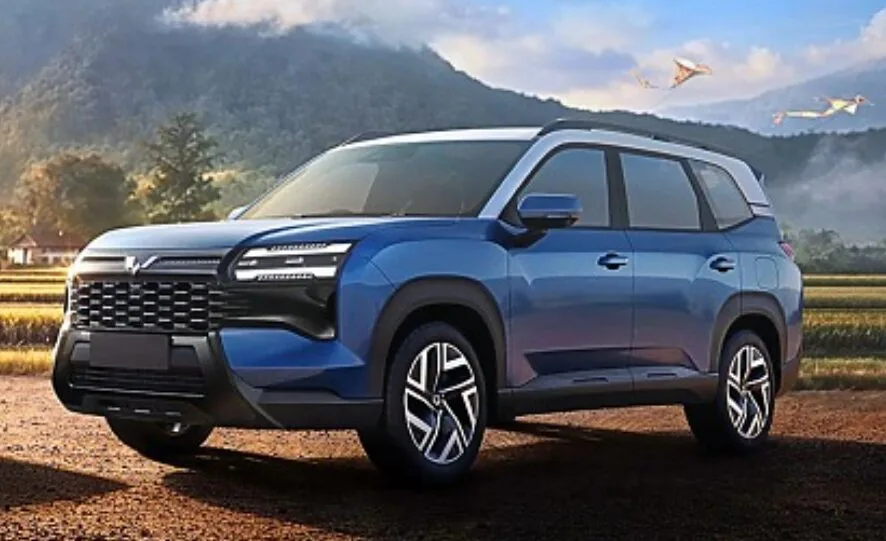
I’ve spent enough time on Indian highways to know one thing for sure: if you want to rule the SUV roost in India, you have to go through Mahindra. It’s the unwritten law of our roads. Whether it’s the sheer presence of an XUV700 or the way they’ve priced their tech, Mahindra has basically owned the C-segment.
But JSW MG Motor India isn’t backing down. After getting some decent momentum with the Windsor, they’re now aiming higher. Much higher. We’re talking about the MG Starlight 560—a C-segment SUV that’s basically a heat-seeking missile aimed directly at the XUV 7XO and the 9S.
The Strategy: More Car, Less Cash?
If you’ve followed MG’s play in India, you know their template by heart now. They give you a car from a segment above at a price that makes you double-check the brochure. The Starlight 560 (internally called the 520) is built on their new F150 platform.
The interesting bit? This platform is like a Swiss Army knife.
I was recently chatting with Anurag Mehrotra from MG, and he was quite clear about it—this architecture isn’t just for show. It can handle a standard petrol engine (ICE), a full EV setup, and even a Plug-in Hybrid (PHEV). Honestly, a PHEV in this segment could be the “Goldilocks” solution for India. Think about it: EV silence for your soul-crushing Mumbai or Bangalore office commute, but zero range anxiety when you’re heading to Goa or the hills on the weekend.
Why Mahindra Should (Actually) Be Worried
Right now, Mahindra and Tata basically split the pie. Mahindra has the lion’s share, and they’ve done it by offering that “big SUV” feel that Indian buyers crave. But MG is betting that we’re ready to move past just diesel grunts and heavy steering.
MG’s goal is to have 75% of their sales coming from “New Energy Vehicles.” That’s a bold claim in a country where we still love the smell of diesel in the morning. But here’s the thing: if they can deliver a Plug-in Hybrid that gives you 50-60km of pure electric range for the city and a petrol engine for the highway—all without the “premium” tax—people will listen.
“It’s about understanding the unmet need,” Anurag mentioned.
And he’s right. The unmet need in the XUV700 segment is real-world fuel efficiency in bumper-to-bumper traffic. If the Starlight 560 solves that, it’s a game-changer.
Changes on the Ground (Literally)
It’s not just talk, either. I’m hearing that the Halol plant in Gujarat is currently under the knife. They aren’t just adding a few bolts; they are reconfiguring the whole body shop to handle these new architectures. Biju Balendran, who runs the manufacturing side, hinted that they might even pause some lines in 2026 to get everything ready for a massive capacity jump—from 1.8 lakh units to nearly 3.5 lakh by 2027.
That tells me they aren’t planning to be a “niche” player. They want volume.
My Take: Will It Work?
Look, the Starlight 560 sounds great on paper, but the real test will be the “pothole reality.” How does it handle a flooded Delhi road? Does the hybrid system get jerky when the petrol engine kicks in? Can it survive the 45-degree Indian summer without the battery cooling system screaming for mercy?
If they price it aggressively—following that Windsor template—and give us a cabin that feels more like a lounge than a cockpit, they have a serious shot. Mahindra has the legacy, but MG is bringing the tech.
It’s going to be a messy, loud, and very interesting fight. I, for one, can’t wait to get behind the wheel and see if it’s just another tech-heavy crossover or a proper SUV that can handle our chaos.