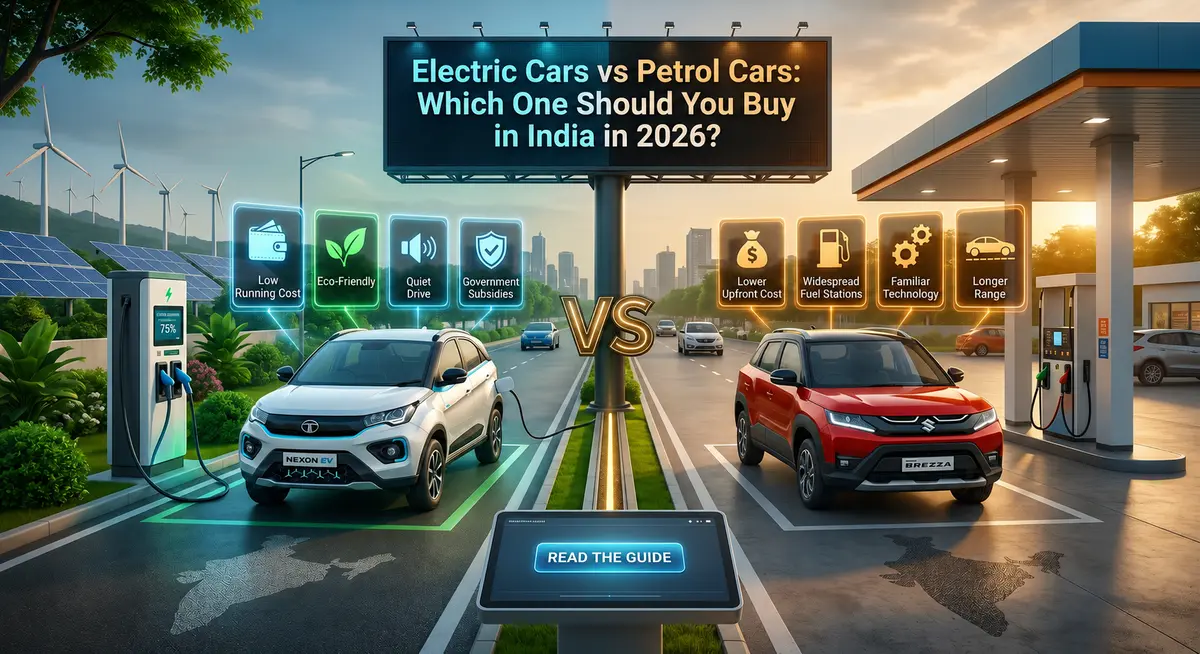
Buying a new car in 2026 is no longer as simple as choosing between a hatchback, sedan, or SUV. Today, one of the biggest questions facing Indian buyers is whether to go electric or stick with a traditional petrol-powered vehicle.
This is why Electric Cars vs Petrol Cars has become one of the fastest-growing search topics in the automotive industry. Rising fuel prices, improving battery technology, expanding charging infrastructure, and government support for EVs have pushed electric mobility into the mainstream.
At the same time, petrol cars continue to dominate Indian roads because of their convenience, proven reliability, and widespread fuel station network.
So, which option actually makes more sense for Indian buyers in 2026?
The answer depends on your driving habits, budget, daily commute, and long-term ownership goals. In this detailed comparison, we break down the differences between electric cars and petrol cars based on running costs, maintenance, performance, EMI, and overall ownership experience.
Why the Electric Cars vs Petrol Cars Debate Matters More Than Ever
Just a few years ago, electric vehicles were considered niche products with limited range and high prices. Today, the situation is completely different.
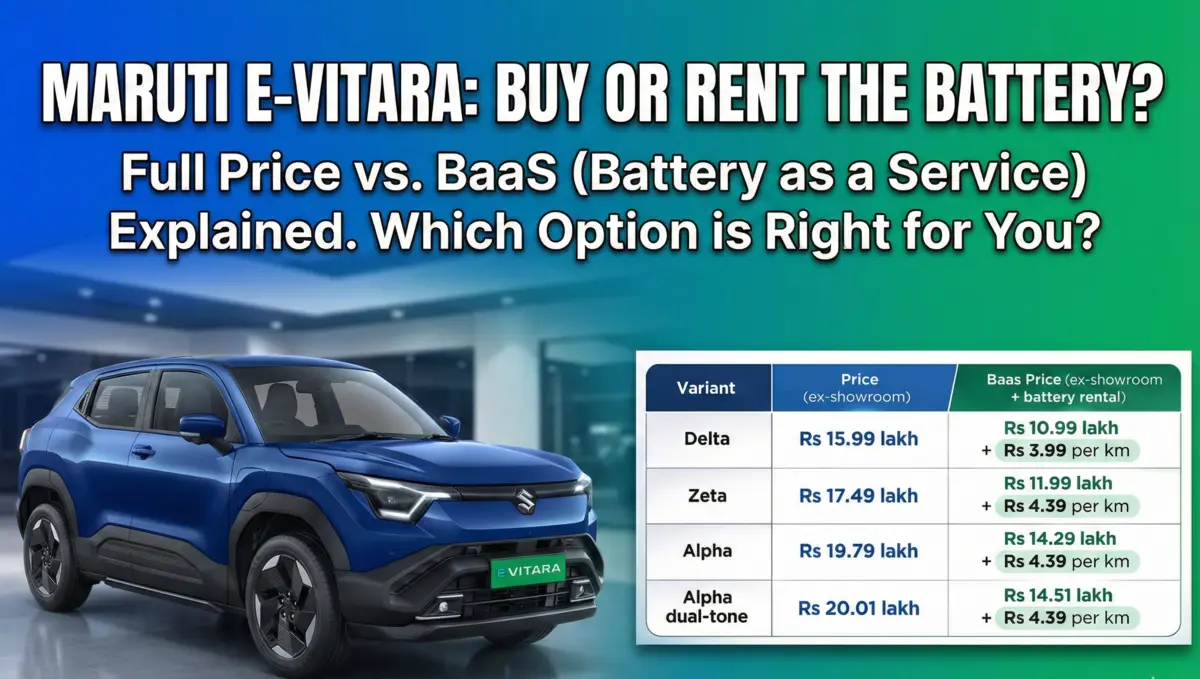
Automakers are launching new EVs almost every month. Models like the Tata Curvv EV, Hyundai Creta EV, Mahindra BE series, and Maruti e Vitara are expected to make electric mobility more accessible than ever.
At the same time, petrol vehicles continue to evolve with better fuel efficiency, advanced safety systems, and feature-rich cabins.
For buyers planning to keep their vehicle for five to seven years, understanding the real-world costs of ownership is more important than ever.
Electric Cars: Lower Running Costs, Higher Long-Term Savings
Electric vehicles operate using battery packs and electric motors instead of traditional internal combustion engines. Because they have fewer moving parts, they are generally cheaper to maintain and operate.
For city commuters, EVs can significantly reduce monthly transportation expenses.
| Feature | Electric Cars (EVs) |
|---|---|
| Running Cost | ₹1–2 per km |
| Maintenance Cost | Very Low |
| Driving Range | 300–700 km |
| Charging Time | 30 Minutes to 8 Hours |
| Tailpipe Emissions | Zero |
| Best For | Daily Commuters and Urban Drivers |
Why Choose an Electric Car?
Electric cars are becoming increasingly popular among urban buyers because of their low running costs and minimal maintenance requirements. They are ideal for daily commuting, city driving, and users looking to reduce fuel expenses. With improving battery technology and expanding charging infrastructure, EVs are now a practical option for many Indian consumers.
One of the biggest reasons buyers are switching to EVs is the opportunity to reduce fuel expenses. For someone driving 1,500 to 2,000 kilometres every month, the savings can become substantial over time.
Petrol Cars: Convenience Still Matters
Despite the growing popularity of EVs, petrol cars continue to be the preferred choice for a large section of Indian buyers.
The biggest reason is convenience.
You can refuel almost anywhere in the country within minutes and continue your journey without worrying about charging stations or waiting times.
| Feature | Petrol Cars |
|---|---|
| Running Cost | ₹6–9 per km |
| Maintenance Cost | Moderate |
| Refueling Time | Approximately 5 Minutes |
| Driving Range | 600–900 km |
| Availability | Across India |
| Best For | Long-Distance Travel and Rural Areas |
Why Choose a Petrol Car?
Petrol vehicles continue to be a practical choice for buyers who frequently travel between cities or cover long highway distances. Their extensive fuel station network and quick refueling capability make them ideal for users who prioritize convenience and flexibility.
Running Cost Comparison: Where EVs Take a Clear Lead
When comparing Electric Cars vs Petrol Cars, running costs often become the deciding factor.
Consider a buyer who drives approximately 1,500 kilometres every month.
| Vehicle Type | Average Cost Per Km | Monthly Cost |
|---|---|---|
| Electric Car | ₹1.5 | ₹2,250 |
| Petrol Car | ₹7 | ₹10,500 |
Over one year, the difference can exceed ₹90,000.
For high-mileage users, these savings can quickly offset the higher purchase price of an electric vehicle.
Winner: Electric Cars
Lower electricity costs give EVs a significant advantage in everyday usage.
Maintenance Costs: A Hidden Expense Many Buyers Ignore
Many car buyers focus only on the purchase price and fuel efficiency. However, maintenance plays a major role in determining long-term ownership costs.
Petrol vehicles require:
- Engine oil changes
- Air filter replacement
- Spark plug replacement
- Clutch maintenance
- Exhaust system repairs
Electric vehicles eliminate many of these expenses.
Because EVs have fewer moving components, they generally require less maintenance over their lifetime.
Winner: Electric Cars
When it comes to reducing long-term maintenance expenses, EVs have a clear advantage.

Charging vs Refueling: The Biggest Difference
This remains one of the most important factors in the Electric Cars vs Petrol Cars discussion.
Advantages of Electric Cars
- Charge at home overnight
- Lower energy costs
- Growing charging infrastructure
- Convenient for city users
Challenges of Electric Cars
- Charging takes longer than refueling
- Public chargers are still expanding
- Range planning may be necessary for long trips
Advantages of Petrol Cars
- Refuel in minutes
- Fuel stations available everywhere
- Ideal for spontaneous long-distance travel
Challenges of Petrol Cars
- Rising fuel prices
- Higher monthly running expenses
Winner: Petrol Cars
For convenience and flexibility, petrol cars still maintain an edge.
Performance Comparison: EVs Are Faster Than Many People Think
One of the biggest misconceptions about electric vehicles is that they are slow.
In reality, EVs deliver instant torque the moment you press the accelerator.
This results in quick acceleration and smooth performance, especially in city traffic.
Electric Car Advantages
- Instant acceleration
- Silent operation
- Smooth power delivery
Petrol Car Advantages
- Higher top speed potential
- Better suited for extended highway driving
- Familiar driving experience
Winner: Draw
Your preference will depend on where and how you drive.
Car EMI: How Much Will You Pay Every Month?
For most car buyers, the real question isn’t the car’s price—it’s how much money will go out of their pocket every month.
Let’s assume:
- Loan Amount: ₹12 Lakh
- Interest Rate: 9%
- Loan Tenure: 7 Years
Under these conditions, the monthly Car EMI for both electric and petrol cars will usually be around ₹19,000 to ₹21,000.
At first glance, some electric cars may seem more expensive than petrol models. However, the story doesn’t end with the EMI.
For example, even if your EV EMI is slightly higher, you can save thousands of rupees every month on fuel and maintenance. Electric cars typically cost just ₹1–2 per kilometre to run, while petrol cars can cost ₹6–9 per kilometre.
This means the money you save on charging and servicing can often offset the higher purchase price of an EV over time.
Example
| Expense Type | Electric Car | Petrol Car |
|---|---|---|
| Monthly EMI | ₹20,000 | ₹19,000 |
| Monthly Running Cost (1,500 km) | ₹2,250 | ₹10,500 |
| Total Monthly Expense | ₹22,250 | ₹29,500 |
As you can see, even with a slightly higher EMI, an electric car may end up costing less overall every month because of its significantly lower running costs.
That’s why buyers should look beyond the showroom price and compare the total monthly ownership cost, not just the EMI.
Car Ownership Cost Comparison
This is where the real difference becomes visible.
When comparing Electric Cars vs Petrol Cars, buyers should evaluate total ownership costs rather than focusing solely on purchase price.
Ownership Cost Includes
- Fuel or electricity expenses
- Insurance premiums
- Scheduled servicing
- Maintenance costs
- Tyre replacement
- Depreciation
| Expense Category | Electric Car | Petrol Car |
|---|---|---|
| Running Cost | Low | High |
| Maintenance | Low | Moderate |
| Service Cost | Low | Moderate |
| Fuel Expense | Very Low | High |
| Overall Ownership Cost | Lower | Higher |
For buyers planning to keep their vehicle for several years, EVs can deliver meaningful savings.
Why More Indians Are Considering Electric Cars
Modern EVs are no longer basic commuter vehicles.
Many now offer premium features such as:
- Panoramic sunroof
- ADAS safety technology
- Large infotainment systems
- Connected car features
- Over-the-air software updates
- Fast charging support
- Premium cabin materials
As technology improves, electric vehicles are becoming more attractive to mainstream buyers.
Electric Cars vs Petrol Cars: Quick Comparison
| Factor | Electric Cars | Petrol Cars |
|---|---|---|
| Running Cost | Excellent | Moderate |
| Maintenance Cost | Excellent | Good |
| Refueling Convenience | Moderate | Excellent |
| City Driving | Excellent | |
| Highway Travel | Good | Excellent |
| Environmental Impact | Excellent | Moderate |
| Long-Term Savings | Excellent | Moderate |
| Ownership Cost | Lower | Higher |
Final Verdict
The answer to the Electric Cars vs Petrol Cars debate depends largely on your lifestyle and driving habits.
If you drive mostly within the city, have access to home charging, and want to reduce long-term expenses, an electric vehicle is likely the smarter financial decision. Lower running costs and reduced maintenance requirements make EVs increasingly attractive in 2026.
However, if your driving involves frequent highway trips, unpredictable travel schedules, or locations where charging infrastructure is still limited, a petrol vehicle remains the more practical choice.
The reality is that both technologies have their strengths. The best option is the one that matches your daily usage pattern rather than simply following market trends.
As charging infrastructure expands and battery technology continues to improve, electric vehicles are expected to play an increasingly important role in India’s automotive future.