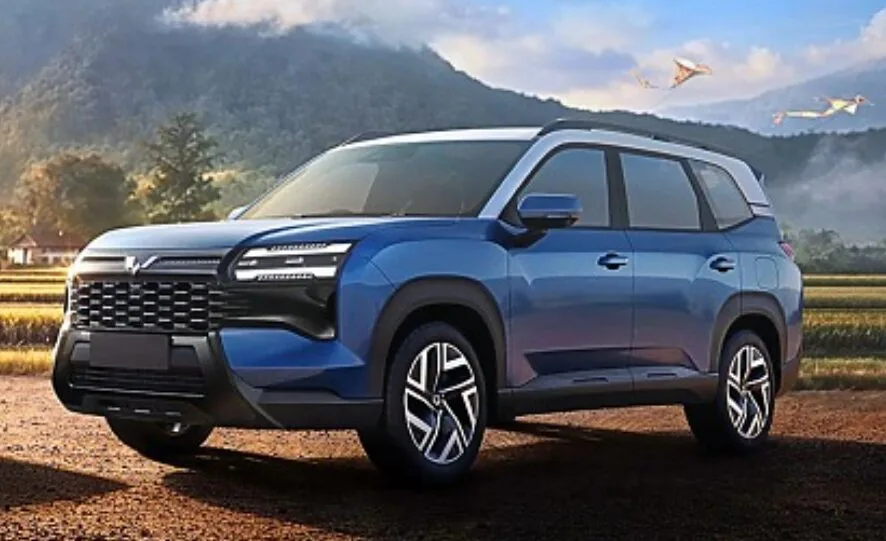
It’s been a long wait. Honestly, while Tata and MG were busy flooding the market with EVs, Maruti Suzuki was sitting back, watching the show. But now they’re here. The e-Vitara is out, and having tracked this market for over a decade, I can tell you this isn’t just another launch. It’s Maruti playing the game by their own rules.
If you’ve been scrolling through Twitter or WhatsApp forwards, you’ve probably seen the numbers flying around. Let’s cut through the noise. I’m going to break down the Maruti e-Vitara BaaS price explained in a way that actually matters to your bank account and your daily commute.
What to Choose in Maruti e-Vitara?
Here’s the deal. You can buy the car outright like a normal person, or you can opt for this new “Battery as a Service” (BaaS) thing.
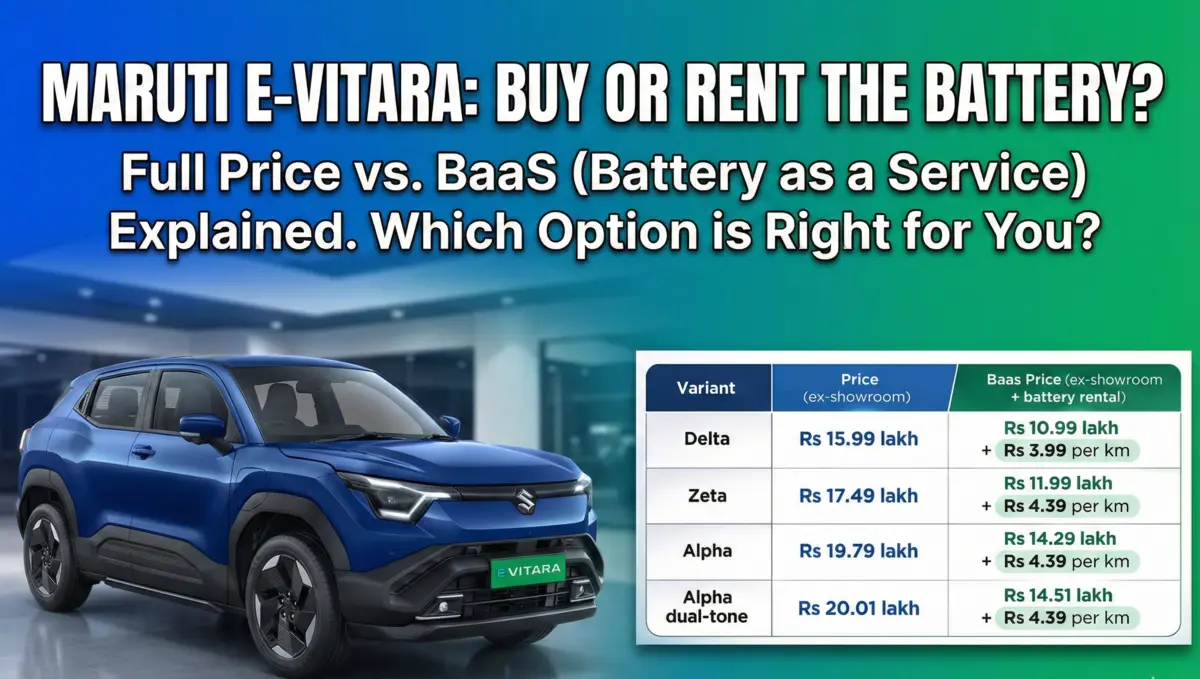
I’ve got the exact variant-wise breakdown right here. Look at these numbers before we talk about what they actually mean on the road:
| Variant | Price (ex-showroom) | BaaS Price (ex-showroom + battery rental) |
| Delta | Rs 15.99 lakh | Rs 10.99 lakh + Rs 3.99 per km |
| Zeta | Rs 17.49 lakh | Rs 11.99 lakh + Rs 4.39 per km |
| Alpha | Rs 19.79 lakh | Rs 14.29 lakh + Rs 4.39 per km |
| Alpha dual-tone | Rs 20.01 lakh | Rs 14.51 lakh + Rs 4.39 per km |
If you buy the whole car—battery included—you’re looking at a starting price of 15.99 lakh going up to just over 20 lakh. That puts it right in the sweet spot. It’s pricier than the MG Windsor but undercuts the upcoming Creta EV.
But here’s where it gets wild. Maruti is letting you buy the base Delta without the battery for just Rs 10.99 lakh. Sounds like an absolute steal, right? You get a midsize SUV for the price of a Swift.
But there’s a catch. You have to pay rent on that battery every single time you drive.
I’ve done the math on this so you don’t have to. If you’re a heavy user—say, you’re doing 60-70 km a day battling traffic from Noida to Gurgaon or fighting through Bangalore’s Outer Ring Road—that Rs 3.99 or Rs 4.39 per km rental cost adds up incredibly fast. Plus, remember, you still have to pay your electricity bill to charge it. Your running cost isn’t just electricity; it’s electricity plus the rental fee.
Truth is, if you plan to keep the car for 7-8 years, just buy the whole thing outright. The rental scheme really only makes sense if you want a lower EMI burden upfront and don’t drive massive distances every month.
Unveiling the Maruti e-Vitara: Specs and Expectations
Let’s talk about what’s under the metal.
The entry-level Delta trim comes with a 49 kWh pack. It pushes out 144 hp. Step up to the Zeta and Alpha trims, and you get the bigger 61 kWh pack, making 174 hp.
Torque is identical across the board at 189 Nm. Now, 189 Nm doesn’t sound like a lot on paper—especially when diesel SUVs give you 250 Nm plus. But here’s the thing about EVs: that torque is instant. There is no lag. You put your foot down at a traffic signal, and you’re just gone. In city traffic, that instant pull feels way punchier than the brochure numbers suggest.

Maruti claims a range of 440 km for the small battery and 543 km for the big one. Let’s be real about Indian driving conditions though. With the AC blasting in May heat and stop-and-go traffic, expect the real-world range to be roughly 300-320 km for the small battery and maybe 380-400 km for the big one. That’s still plenty for a week’s worth of office commutes without range anxiety ruining your day.
Living with It: The Practical Stuff
One thing I genuinely appreciate? Maruti isn’t making you run around for a charger. They are throwing in a 7.4 kW AC home charger with free installation. A lot of brands have quietly stopped doing this or charge extra. Big difference when you don’t have to hire a local electrician to mess with your main lines.
Charging times are pretty standard. About 6.5 hours for the small battery and 9 hours for the big one. Basically, you plug it in when you get home, sleep, and it’s ready when you wake up.
They’ve also tackled the biggest fear Indian buyers have: Resale Value. Everyone is terrified that in 3 years, their EV will be worth peanuts. Maruti knows this. So, they’re offering an assured buyback plan.
- 3 Years: They’ll give you up to 60% of the value.
- 4 Years: Up to 50%.
That is a huge safety net. It gives you the confidence to actually put your money down. Plus, the battery gets an 8-year or 1.6 lakh km warranty. Industry standard, yes, but coming from Maruti, it just feels a bit more reassuring.
The Waiting Game
If you’re ready to write a cheque today, hold your horses. Deliveries have started, but don’t expect to see these on every street corner immediately. Maruti is using India as a global hub for this car, meaning a massive chunk of production is being shipped overseas. Supply is going to be tight here until around July.
Look, the e-Vitara isn’t trying to be a spaceship. It doesn’t have the sci-fi obsession of the BYDs or the overwhelming screen-tech of the MGs. It’s a Maruti. It’s built to just work.
It sits comfortably above the MG Windsor and VinFast VF6, and frankly, with the backing of Maruti’s service network—which let’s face it, is absolutely everywhere—it’s the “safe” choice for a first-time EV buyer.
If you can digest the initial price (or do the math on that rental table above), this is likely the EV that will finally convince the average Indian family to ditch petrol. Just make sure you test drive it on a terrible, pothole-filled road first—that’s the real test.